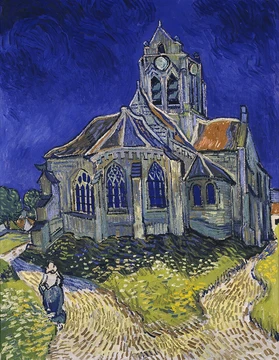
Illustration
Visual explanation of text, concept, or process.

Illustration is a decoration, interpretation, or visual explanation of a text, concept, or process, designed for integration in print and digitally published media such as posters, flyers, magazines, books, teaching materials, animations, video games, and films. Typically created by an illustrator, illustration also means providing an example, either in writing or in picture form. The origin of the word 'illustration' is late Middle English, from Latin 'illustrare'.
- field
- Visual communication and art
- known_for
- Decoration, interpretation, and visual explanation of texts and concepts
- key_historical_mediums
- Woodcuts, engraving, etching, lithography, digital design
Lore & Background
Historically, the art of illustration is closely linked to the industrial processes of printing and publishing. The illustrations of medieval codices were known as illuminations, hand-drawn and painted. With the invention of the printing press during the 15th century, books became more widely distributed and often illustrated with woodcuts. Some of the earliest illustrations come from ancient Egypt, often as hieroglyphs, with a classic example from the Tomb of Pharaoh Seti I, c. In 1600s Japan, Ukiyo-e originated, an influential illustration style using ink-brushed wood block printing, with Hokusai's 'The Great Wave off Kanagawa' as a famous image.
Reader's Guide
Illustration has evolved from hand-drawn illuminations and woodcuts to encompass a wide range of styles and techniques, including drawing, painting, printmaking, collage, montage, digital design, multimedia, and 3D modelling. Specialist areas include architectural, archaeological, botanical, fashion, medical, narrative, and scientific illustration. Technical and scientific illustration communicates information to a nontechnical audience, often using 2D and 3D software. In the art world, illustration was once considered less important than graphic design and fine art, but due to the growth of the graphic novel and video game industries, it is now becoming a valued art form.
Did You Know?
- The word 'illustration' originates from late Middle English, via Old French from Latin 'illustrare', meaning 'illumination; spiritual or intellectual enlightenment'.
Institutional Roots and the 1987 Merger
Over its long history, the school operated under a remarkable succession of names, including the Philadelphia Musical Academy, the Zeckwer-Hahn Philadelphia Musical Academy, the Pennsylvania Museum and School of Industrial Art, the Philadelphia Museum School of Art, the Philadelphia Museum School of Industrial Arts, the Philadelphia Museum College of Art, the Philadelphia Conservatory of Music, the Hahn Conservatory of Music, the Philadelphia College of the Arts, and the College of Performing Arts of the University of the Arts. Each name reflected a shift in mission, governance, or emphasis, yet the core identity as a Philadelphia arts school endured.
A Century of Performing Arts Faculty
The performing arts faculty at UArts and its predecessors assembled an extraordinary roster of musicians, composers, and vocalists spanning generations. Hahn, a violinist and composer who also held the presidency. Camille Zeckwer, a pianist and composer, likewise served as president of the Zeckwer-Hahn Philadelphia Musical Academy. In the jazz realm, hard bop pianist Sam Dockery and drummer Ralph Peterson Jr. both taught at the University of the Arts, while vibraphonist Tony Miceli served as an adjunct associate professor. The vocal and opera departments were shaped by contralto Gabrielle Hunt and by Ada Turner Kurtz, who led the vocal department at the Philadelphia Conservatory of Music.
Visual Arts, Design, and Illustration
The visual arts programs at UArts and its predecessors attracted a remarkable array of painters, sculptors, photographers, and designers across more than a century. The design and photography departments were shaped by Alexey Brodovitch, who established the Department of Advertising Design at the Pennsylvania Museum School of Industrial Design, and by Barbara Blondeau, who chaired the photography and film department.
Humanities, Creative Writing, and Leadership
Beyond the studio and the stage, UArts cultivated a strong humanities and creative writing tradition. Lawrence Curry, a historian and politician, served as a history professor at the University of the Arts for forty years, a tenure that made him one of the longest-tenured faculty members in the institution's history. Helen Drutt, an art historian and gallery owner, contributed her expertise as an art history instructor at the Philadelphia College of Art. In the literary arts, Elise Juska, a novelist, founded the undergraduate creative writing program at the University of the Arts, establishing a dedicated home for emerging writers within the arts university. Her four-decade presence made her a defining intellectual figure at UArts. The institution's leadership also reflected its arts mission, with Sean T. Buffington serving as president and CEO, and Thomas F.
Frequently Asked Questions
What is Illustration in the performing arts?
Illustration is a visual art practice in which an artist creates imagery to decorate, clarify, or give visual form to written text, abstract ideas, or step-by-step processes. Its output appears across posters, books, magazines, teaching materials, animations, video games, and films.
What are Illustration's core functions or 'powers'?
Its primary role is to make the invisible visible—turning a concept, a passage of prose, or a procedure into something the eye can immediately grasp. It can also take the form of a written or drawn example meant to demonstrate a specific point.
How does Illustration's story end?
Rather than reaching a fixed ending, illustration has continuously adapted, moving from woodcuts, engravings, etchings, and lithographs into the digital design tools artists use today. Its narrative is ongoing, with each new medium reshaping how visual meaning is delivered.
Why is Illustration important?
It has served as humanity's most direct bridge between an idea and an audience's understanding, functioning across thousands of years and countless cultures. Without it, texts, concepts, and processes would rely solely on words to convey meaning.
More in Performing Arts & Crafts 1-20
Spotted an error? Know more?
This is a living reference — every entry is fact-audited, and reader corrections feed straight into our audit queue. Suggest an edit · See this site's audit record